
There is nothing more disheartening for a gardener than walking into a vibrant spring garden only to find once-pristine cabbage, kale, or broccoli leaves riddled with ragged, irregular holes. If you’ve noticed small green caterpillars or white butterflies fluttering around your brassica patch, you are likely facing an invasion of cabbage worms.
These pests are actually the larvae of two distinct species: the white cabbage butterfly (Pieris rapae), which lays yellow bullet-shaped eggs during the day, and the cabbage looper (Trichoplusia ni), a night-flying moth that produces green, white-striped caterpillars. Both are voracious, "wormlike" feeders that can quickly destroy small seedlings or compromise the health of mature plants by consuming up to 10% of their leaf area.
While their presence can feel catastrophic, you don't need to resort to harsh chemicals to reclaim your harvest.
By understanding their life cycle and employing a combination of Integrated Pest Management (IPM) strategies—such as handpicking, using the highly effective biological control Bacillus thuringiensis (Bt), or installing floating row covers—you can successfully eliminate these pests while keeping your garden ecosystem healthy and organic.
Today, we'll dive into the most reliable methods to get rid of cabbage worms and protect your favorite cool-season crops for good.
Types of Cabbage Worms
The term "cabbage worm" is often used as a catchall for several species of small, green caterpillars that are among the most common and destructive pests in the home garden.
These "worms" are actually the larval (immature) stage of various moths and butterflies from the order Lepidoptera. They are primarily attracted to vegetables in the Brassicaceae (cabbage or mustard) family, such as cabbage, broccoli, cauliflower, kale, and Brussels sprouts.
Here are the primary types of cabbage worms you are likely to encounter:
1. Imported Cabbage Worm (Pieris rapae)

This is the species most people are referring to when they use the name "cabbage worm".
- Appearance: The larvae are velvety green caterpillars with faint yellow stripes. They are typically slow-moving and blend in expertly with the green foliage of their host plants.
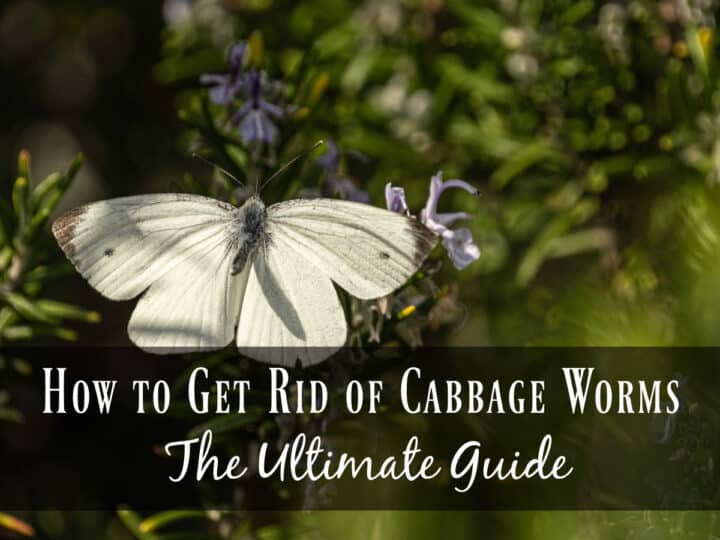
- Adult Form: They develop into the cabbage white butterfly, which is a small, pearly white butterfly with one or two black spots on its wings.
- Life Cycle: The butterflies lay tiny, single, yellow, bullet-shaped eggs on the undersides of leaves. Once they hatch, the caterpillars feed voraciously, going through five larval phases (instars) before pupating into a light green chrysalis.
2. Cabbage Looper (Trichoplusia ni)

While often grouped with cabbage worms, loopers have a distinct appearance and way of moving.
- Appearance: These caterpillars are smooth and pale green with thin white stripes running down each side of their bodies.
- The "Loop" Movement: Unlike the imported cabbage worm, loopers lack middle legs. This causes them to arch their backs and "loop" as they crawl, moving similarly to an inchworm.
- Adult Form: The adult is a mottled brown, semi-nocturnal moth with a silver-colored mark on its wings resembling the Greek letter "ni".
- Feeding Habits: They are exceptionally destructive feeders that primarily consume leaf greens, often boring into heads of cabbage or cauliflower and leaving behind waste that renders the plant inedible.
3. Cross-Striped Cabbage Worm (Evergestis rimosalis)

This species causes similar damage to the others but is visually very different.
- Appearance: These caterpillars have slate-gray bodies with many faint transverse stripes across their tops. They are most recognizable by a prominent yellow and black stripe running down each side and their distinct orange heads.
- Adult Form: The adult is a brown moth that is primarily active at night.
- Eggs: Unlike the single eggs of the small white butterfly, cross-striped cabbage worms lay their yellow eggs in clusters on leaf undersides.
4. Diamondback Moth (Plutella xylostella)

Though smaller, these are another common member of the cabbage worm complex.
- Appearance: The larvae are small, light green caterpillars with bodies that taper toward both the head and the rear.
- Behavior: If disturbed, these larvae often wriggle violently and drop from the leaf on a silken thread.
- Damage: They frequently feed on the growing points of young plants and can be identified by the loose, gauze-like cocoons they weave on leaves.
Why Cabbage Worms Target Your Garden
All these species prefer plants that produce natural glucosinolates or glucosides, which are chemical compounds found in almost every cruciferous crop. These pests are multi-generational, meaning they can produce several cycles of offspring in a single season—ranging from two to three in cold climates to as many as seven in warmer regions.
This rapid reproduction means that even after you clear one infestation, a new generation is often just around the corner.
Cabbage Worm Look-Alikes
While the term "cabbage worm" is often used as a catchall for various green caterpillars, several specific insects are frequently confused with the imported cabbage worm (Pieris rapae) due to their similar appearance and the damage they cause to brassica crops.
Common Pest Look-Alikes
- Cabbage Looper (Trichoplusia ni): This is the most common insect confused with the imported cabbage worm. While both are green, the looper is a "smooth-skinned" caterpillar with thin white stripes on its sides. It is most easily distinguished by its "inching" or "looping" movement, caused by a lack of middle legs.
- Diamondback Moth (Plutella xylostella): These larvae are light green and much smaller than other cabbage worms, typically reaching only about one-third of an inch in length. Their bodies are unique because they taper toward both the head and the rear.
- Cabbage Moth (Mamestra brassicae): These are also from the Lepidoptera order and are often categorized under the general "cabbage worm" umbrella.
- Cabbage Webworm (Hellula undalis): These larvae are similar to other brassica pests but are distinguished by their habit of producing silken webbing as they feed.
- Cross-Striped Cabbage Worm (Evergestis rimosalis): While they target the same crops, these look quite different with slate-gray bodies, transverse stripes, a prominent yellow and black stripe on each side, and a distinct orange head.
- Orange Tip Butterfly (Anthocharis cardamines): This is another lepidopteran relative whose larvae are often included in the cabbage worm category.
Beneficial "Look-Alikes"
It is critical for gardeners to distinguish pests from beneficial residents that might look similar at first glance:
- Syrphid Fly Larvae: These are important predators that eat aphids. They look like small green or brown slugs or legless caterpillars, but unlike pests, they can be observed busily consuming aphids rather than the plant foliage.

Differentiating Features
| Feature | Imported Cabbage Worm | Cabbage Looper |
|---|---|---|
| Egg Shape | Oval-shaped, bullet-like | Round and yellowish |
| Egg Layout | Usually laid singly on leaf undersides | Multiple eggs laid on both leaf surfaces |
| Larval Movement | Standard crawling motion | "Looping" or inchworm motion |
| Larval Skin | Velvety green with a dark head | Smooth, pale green with white stripes |
Observation and Tracking Cabbage Worms
Effective pest management begins long before you reach for a spray bottle; it starts with the quiet investment of time and patience in your garden.
By becoming a keen observer, you can identify "distress signals" from your plants and intervene before a few stray caterpillars turn into a full-scale invasion - because believe me, it can happen fast!
Monitoring: Your Garden Walkabout
Regular inspection is the backbone of any Integrated Pest Management (IPM) program. You should ideally inspect your brassica crops at least once a week, and increase this to twice a week during the peak of the growing season when pests are most active.
I recommend making a "morning walk" part of your daily routine to scout for signs of damage, such as ragged holes, dark greenish-brown fecal pellets, or the presence of white butterflies fluttering around your plants.
To monitor effectively, you must get close to the plant and look beyond the surface foliage. Always turn over the leaves to check the undersides, and inspect the crevices near the newest growth at the leaf center, where larvae love to hide.
Because these pests are often tiny and blend in perfectly with the silvery-blue or green leaves of kale and cabbage, an 8× to 15× hand lens is an invaluable tool for spotting them early.
The Garden Notebook: Your Long-Term Memory
A garden notebook or journal is an essential tool that allows you to learn from each season and "plan better the following year". It serves as a personal record of what happened, when it happened, and how your plants responded.
When you spot cabbage worms, record the following in your log:
- The Date and Timing: Note when the first "cabbage white" butterflies appeared and when the first holes were noticed.
- Affected Varieties: Some varieties, like red or purple cabbage, may attract fewer pests than green ones; tracking this helps you choose more resilient cultivars in the future.
- Treatment Results: Document any interventions you took—whether it was handpicking, installing row covers, or using a biological control like Bt—and record how effective they were.
- Site History: Use your journal to map out where you planted your "Cabbage Cousins" to ensure proper crop rotation, which prevents pest populations from building up in the soil year after year.
Catching Them Early: The Hunt for Eggs

The most proactive way to stop an infestation is to find and eliminate the eggs before they hatch into voracious feeders.
Since every insect begins life as an egg, spotting them is a highly reliable indicator of future outbreaks.
- Imported Cabbage Worm Eggs: Look for tiny, yellow, bullet-shaped (cylindrical) eggs laid singly on the undersides of leaves.
- Cabbage Looper Eggs: These are typically small, round, and greenish-white, and while often laid on the upper leaf surface, they can be found on both sides.
- Cross-Striped Cabbage Worms: These pests lay their yellow eggs in distinct clusters on the leaf undersides.
Once found, you can simply swipe the eggs away with your finger or crush them while wearing gloves. This quick action removes the threat entirely without the need for pesticides, ensuring your leafy greens remain pristine and organic.
Advanced Monitoring Tactics
- Look for "Frass": One of the most reliable indicators of a cabbage worm is the presence of "frass," or dark greenish-brown fecal pellets, left behind on the leaves where they feed. If you see poop, a caterpillar is almost certainly nearby.
- The "Tapping" Technique: To find well-camouflaged pests, you can gently tap or shake the plant over a piece of white plastic or paper. This makes the falling larvae or nymphs much easier to identify against a high-contrast background.
- Focus on Hiding Spots: Remind readers that these pests are "sneaky" and often disguise themselves along the center vein of a kale leaf or deep within the new growth at the plant's center.
- Nighttime Inspections: Since some brassica-loving pests like the cabbage looper are semi-nocturnal, a flashlight inspection at night can reveal larvae that are hiding during the day.
Elevating the Garden Notebook
- Map for Crop Rotation: Use your garden notebook to sketch diagrams of your beds each year. By tracking exactly where your "Cabbage Cousins" were planted, you can ensure you rotate them to a different section the following year to prevent pests from finding their food source as they emerge from the soil.
- Anticipate the Arrival: Use past entries to predict when pests will emerge in your specific climate. For example, if your log shows butterflies appearing every year in mid-May, you can proactively install row covers a week early to disrupt the cycle entirely.
- Track Varietal Success: Note which specific cultivars were less affected. For instance, you might record that red or purple varieties in your garden were "significantly less eaten" due to their higher anthocyanin content, which can be mildly toxic to caterpillars.
Early Intervention (Egg & Larvae Management)
- Recognize the "Bump": Observe the behavior of white butterflies; as they land, they often "bump their bums" on the leaves to deposit their eggs.
- Egg Identification Nuance: Teach readers to distinguish between "friend and foe" by noting that cabbage worm eggs are usually laid solo, whereas beneficial ladybug eggs are also yellow and oblong but are almost always found in distinct clusters.
- Manual Removal: If you miss the eggs and see newly hatched caterpillars, manually picking them off and dropping them into soapy water is often enough to stop a spread in its tracks for small-scale gardens.
Utilizing External Alerts
- Phytosanitary Alerts: Suggest that readers subscribe to local gardening alert services or online forums. These services often send emails regarding regional pest booms, telling you exactly which insects to watch for in your area at any given time.
Building Resilience from the Ground Up
The most sustainable way to manage cabbage worms is to create an environment where they struggle to thrive. By focusing on the health of your garden's foundation—the soil and the plant’s nutritional needs—you can build a resilient ecosystem that naturally resists heavy infestations.
Healthy Soil: The Foundation of Resistance
Prevention of pest problems begins with healthy, well-fed soil, which is the most precious resource in your garden. A healthy soil food web, teeming with a diversity of beneficial bacteria, fungi, and microorganisms, acts as the first line of defense for your plants.
These organisms not only help provide nutrients in the specific form plants need but also assist in suppressing diseases and keeping "troublemakers" in check through natural competition.
When plants are grown in balanced, nutrient-rich soil, they become robust specimens that are less susceptible to pests and better able to shrug off damage if it does occur.
Conversely, plants stressed by a lack of nutrients, poor soil structure, or inadequate water become "magnets for problems". In the organic movement, it is a core doctrine that truly healthy plants will either be unassailable or will simply outgrow the damage caused by insect predators.
Nitrogen Management: Feeding the "Nitrogen Pigs"
Cabbage and kale are often described by gardeners as "nitrogen pigs" because they are high-demand crops that require significant amounts of nitrogen to produce healthy green leaves. If these plants face a nitrogen deficiency, their growth will appear stunted and weak, making them even more vulnerable to cabbage worm attacks.
A smart, organic strategy for managing this high demand is to ensure your "Cabbage Cousins" follow a "soil-boosting" crop like peas or beans. Legumes have a unique symbiotic relationship with soil-dwelling bacteria called rhizobia, which extract nitrogen from the air and store it in nodules on the plant's roots.
When these leguminous plants are harvested or cut back at the end of the season, they decompose and return the stored nitrogen to the soil, leaving it richer than they found it.
Following these soil-enriching crops with nitrogen-hungry brassicas ensures your greens have the fuel they need to grow vigorously and withstand pest pressure.
Crop Rotation: Breaking the Cabbage Worm Life Cycle
One of the gardener's most effective weapons against cabbage worms and related diseases is crop rotation. Pests and diseases tend to accumulate in the soil when related crops are grown in the same location year after year, leading to a gradual decline in plant performance and more severe outbreaks.
Many garden pests, including various beetles and moths, overwinter in the soil or beneath plant debris. If you plant brassicas in the same bed every year, the cabbage worms emerging from the soil the following spring will find a "ready food supply" waiting for them.
By rotating your plant families—for instance, moving your brassicas to a different garden bed every year on a three- to four-year cycle—you isolate these pests from their primary food source and disrupt their infection cycles. This simple practice forces pests to travel further to find host plants, significantly reducing the chances of a catastrophic population boom in your garden.
How Purple and Red Brassica Varieties Deter Cabbage Butterflies

Planting purple or red brassica varieties is a highly effective, natural strategy for managing cabbage worms and moths.
Believe it or not, these colorful cultivars often experience significantly less damage than their green counterparts due to several key factors:
1. Disruption of Camouflage
A leading theory for why these varieties are less affected is that green or pale-colored pests cannot blend in or hide as easily on brightly colored foliage. On a standard green cabbage leaf, a green caterpillar is nearly invisible to predators, but on a vibrant purple or red leaf, it stands out clearly. This makes the larvae an easy target for natural predators like birds and beneficial insects, which can quickly spot and remove them.
2. Chemical Deterrence (Anthocyanin)
The same compound that gives these vegetables their beautiful red, purple, and blue pigments—anthocyanin—serves as a natural defense mechanism. Studies have shown that this antioxidant-rich flavonoid is mildly toxic to caterpillars. This chemical presence can discourage feeding or even deter larger pests like squirrels from bothering the plants.
3. Selective Egg-Laying
When provided with a choice, cabbage moths will almost exclusively lay their eggs on green varieties. In mixed garden beds, it is common to find every green cabbage riddled with worm damage while neighboring red cabbages remain completely unblemished.
Recommended Purple and Red Brassica Varieties
If you want to use color to protect your harvest, consider planting these specific varieties:
- Cabbage: 'Red Acre', 'Mammoth Red Rock', and various red savoy types.
- Kale: 'Redbor' (which intensifies in color as temperatures drop), 'Red Russian', and other red kale varieties.
- Cauliflower: 'Graffiti' (a rich, deep-purple variety).
- Kohlrabi: Bright purple varieties are available and often less interesting to pests than more "refined" brassicas.
- Mustard Greens: 'Osaka Purple' or 'Giant Red' mustard.
By integrating colorful options into your garden, you not only create a more visually striking landscape but also "trick the moths with color," providing a built-in layer of organic pest protection.
Make a Decoy!

Using a moth decoy is a creative, preventative strategy based on the idea that cabbage white butterflies are territorial.
Many gardeners believe that if an adult butterfly sees what looks like another "cabbage white" already occupying a plant, they will stay away to avoid competition.
Here's how to get started:
- How to Make or Get Them: The most common approach is to create your own DIY dummy butterflies. You can easily find printable templates online to help with the design (try Etsy!). Alternatively, pre-made decoys can be purchased from various garden suppliers.
- Effectiveness: It is important to note that this tip is considered more anecdotal than other scientifically proven methods. While some gardeners "swear by it," it may not be 100% effective on its own.
- Strategy Tip: Because it is not a guaranteed fix, I recommend pairing decoys with other control methods—such as handpicking or row covers—rather than relying on them as your only line of defense.
This method is a simple, non-toxic way to potentially reduce the presence of egg-laying adults in your brassica patch without the use of any sprays or chemicals.
Biological Solutions for Cabbage Worm Control
The organic garden is a living, breathing ecosystem where you are not alone in the fight against pests. By leaning into nature's existing checks and balances, you can manage cabbage worms effectively while enhancing the overall health and biodiversity of your landscape.
Attracting Beneficials to the Garden
Nature provides an "army" of beneficial creatures that patrol your plants and solve pest problems before they spiral out of control. Key allies in the battle against cabbage worms include:
- Predatory and Parasitic Insects: Ladybugs, lacewings, hoverflies, spiders, and ground beetles all feed on various life stages of the cabbage worm. Parasitic wasps (such as Trichogramma) are particularly effective; the adults lay eggs inside caterpillars or their pupae, and the resulting larvae feed on the host from the inside, killing it.
- Insect-Eating Birds: Birds like bluebirds, house sparrows, and skylarks are excellent "cleanup crews" that will pluck caterpillars directly from your plants.
To invite these beneficial predators to stay, you must provide what they need: food, water, and habitat. Dedicate space around garden edges for pollinator borders filled with nectar-centric flowers like asters, goldenrod, cilantro, dill, fennel, yarrow, and sweet alyssum.
Providing a consistent water source, such as a birdbath, and installing birdhouses will also encourage these natural predators to set up permanent residence in your yard.
Companion Planting: A Natural Defense System

Companion planting uses a diverse mix of plants to create a "natural pest control system" that protects your crops without the need for synthetic chemicals. This strategy works through several mechanisms:
- Sensory Confusion: Many pests, including cabbage butterflies, find their host plants by scent and leaf shape. Interplanting brassicas with aromatic herbs like sage, thyme, lavender, rosemary, onions, and garlic creates a "masking" effect that confuses pests and makes it harder for them to locate their targets.
- Trap Cropping: Some plants are so attractive to cabbage worms that they can be used to lure pests away from your main vegetables. Nasturtiums are a classic trap crop; butterflies will often lay their eggs on the nasturtiums instead of your kale or cabbage.
- Repellent Scents: Flowers like marigolds produce a strong fragrance that acts as a natural deterrent for many pests while simultaneously attracting predators like ladybugs.
Microbial Help: Targeted Biological Control
When an infestation is severe, biological pesticides offer a highly specific and organic alternative to broad-spectrum poisons and is one of the best ways to get rid of cabbage worms.
The most popular choice is Bacillus thuringiensis (Bt), specifically the variety kurstaki (Btk), which is a naturally occurring soil bacterium.
- How it Works: Bt produces crystal proteins that, when ingested by caterpillars, paralyze their digestive systems. The pests immediately stop feeding and die within a few days.
- Targeted Safety: Bt is uniquely advantageous because it is lethal only to lepidopteran larvae (butterflies and moths) and is considered harmless to humans, pets, and other beneficial insects like bees and ladybugs.
- Application Tips: Bt is most effective against small, newly hatched caterpillars. Because it degrades rapidly in sunlight and washes off with rain, you should plan to reapply it every seven to ten days if pests persist.
- A Final Note of Caution: Since Bt kills all butterfly and moth larvae indiscriminately, take care to avoid overspraying near host plants for beneficial species, such as milkweed for monarch butterflies.
Tending and Maintaining The Garden
Proactive management is the difference between a thriving vegetable patch and a struggling one. By establishing a consistent routine during the growing season and performing a thorough cleanup at its end, you can disrupt the life cycles of cabbage worms and other common garden pests.
Mid-Season Care: The Power of Ten Minutes
Maintaining a healthy garden does not require hours of labor every day; instead, success is often found in consistent, focused observation. At a minimum, an average-sized kitchen garden can be kept thriving with just ten minutes of daily care.
This practice serves as a "garden vitamin," ensuring that issues are identified as they arise rather than after they have reached a catastrophic peak.
During these short daily walks, you should monitor your crops for early signs of damage, such as small pinholes or the presence of butterflies, which indicate that caterpillars may soon follow.
This approach allows you to "nip an infestation in the bud" by finding pests like cabbage worms when they are still small and easy to manage through simple handpicking.
Beyond pest control, this time spent walking the paths and taking mental notes allows you to pinch, prune, and stake plants as needed, avoiding a "weekend crush" of labor-intensive tasks that can become overwhelming.
Cleanup: Denying Pests a Winter Home
Proper end-of-season sanitation is critical because many of the most destructive garden pests and diseases overwinter in or on dead vegetation.
If you leave spent plants in the garden, you are essentially providing a "welcome mat" for pests like the cabbage whitefly and various moths to hibernate and reappear the following spring.
To ensure a successful start for the next growing season, follow these cleanup steps:
- Remove Spent Plants: Once annual vegetables have finished producing, pull them out to eliminate potential reservoirs for pests and pathogens.
- Dispose of Infested Material: Any plant material that shows signs of disease or heavy insect infestation should be taken out and discarded or burned rather than added to a standard cold compost pile, where pathogens may survive.
- Clear Garden Debris: Raking up fallen leaves and removing old boards or clutter reduces the available cover for small mammals and overwintering insects.
- Winterize Tools: Use this time to clean and sanitize your gardening tools, which prevents the spread of diseases between seasons and ensures your equipment is ready for spring.
Performing these tasks while the weather is still relatively dry makes the process more pleasant and leaves you with a clean slate for the upcoming year.
While it may be tempting to leave the garden "as is" after the final harvest, this off-season preparation is a foundational step for organic pest management.
You may also enjoy reading: