The Best Companion Plants for Okra

Often called "Lady's Finger" for its elegant, tapering pods, okra (Abelmoschus esculentus) is one of the hardiest and most exotic-looking members of the hibiscus or mallow family (Malvaceae).
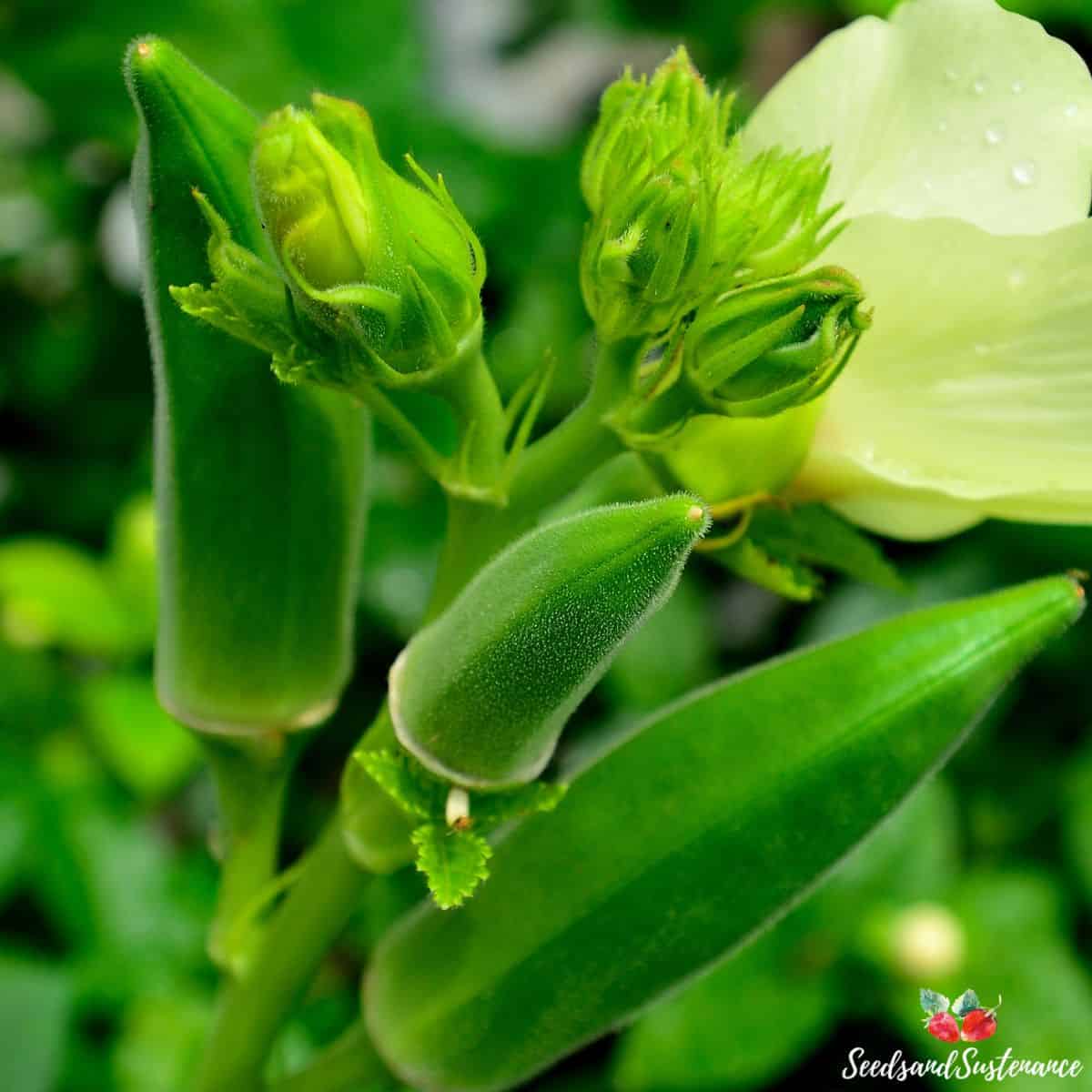
While many gardeners primarily value its edible seedpods, the plant is stunning enough to be grown as an ornamental, producing showy, creamy yellow or pink flowers with deep burgundy centers that resemble its hibiscus cousins.
These striking blossoms are even surprisingly fragrant, with a scent that has historically served as a base for perfumes. Once these flowers appear, the plant's rapid growth is truly remarkable, often transforming a bloom into an edible pod in just about five days.
The Sun-Worshipper’s Profile
To grow okra successfully, one must understand its nature as a true sun-worshipper.
Believed to have originated in Africa and Asia, okra is perfectly adapted to intense summer heat and dry weather. It thrives in conditions that would cause other vegetables to wither, specifically requiring full, blazing sun—ideally six to eight hours a day—to reach its full potential. They do very well in zone 10 and above.
On the flip side, okra is sensitive to the cold. In colder climates or seasons, okra seeds will not germinate, and plants will fail to thrive until the soil temperature has warmed to at least 70°F (21°C).
Under the right conditions, these sturdy stalks can tower six to seven feet tall, creating a commanding presence in any garden.
What is Companion Planting?
If you want to maximize your okra harvest while maintaining a healthy garden, companion planting is an essential organic strategy.
At its core, companion planting is the practice of grouping different fruits, vegetables, herbs, and flowers to create a mutually beneficial ecosystem.
Instead of growing a single crop in isolation, you pair "good neighbors" that support each other in various ways:
- Pest Management: Some companions act as "trap crops" to lure pests away, while others have strong scents that repel harmful insects.
- Pollination Boost: Aromatic herbs and bright flowers attract bees and other pollinators, which are essential for turning okra blossoms into plump pods.
- Resource Sharing: Taller plants like okra can provide dappled shade for low-growing, tender-leaved crops, while ground-hugging companions act as a living mulch to suppress weeds and maintain soil moisture.
- Soil Enrichment: Certain plants, such as legumes, can even improve the soil quality for their neighbors by "fixing" nitrogen.
Why Your Okra Needs Good Neighbors

To reach its full potential, okra should not be grown in isolation. While it is a hardy plant, its success depends heavily on the surrounding garden ecosystem.
By choosing the right companions, you can minimize the need for chemical interventions and create a self-sustaining environment where your okra doesn't just survive, but thrives.
Pest Management: Repellants and "Trap Crops"
One of the best reasons to use companion planting with okra is to manage pests naturally.
This can be achieved through two primary strategies:
- Aromatic Repellants: Many aromatic herbs use their strong fragrances to create a "protective dome" that confuses or repels pests. For example, basil is a heavy hitter in the okra patch, using its sweet scent to ward off stink bugs, aphids, flea beetles, and spider mites. Members of the allium family, such as garlic and onions, are equally effective in deterring scarab beetles and even rabbits.
- Trap and Sacrificial Crops: Instead of repelling pests, some companions act as trap crops (or sacrificial plants) that are more attractive to certain bugs than the okra itself. Nasturtiums are a classic choice (one of my favorites!); they lure aphids, spider mites, and thrips away from your primary harvest. By sacrificing these decoy plants, you keep your okra pods clean and healthy.
Pollination Boost: Turning Flowers into Fruit
Okra is bee-pollinated, and without proper visitation from insects, your beautiful hibiscus-like flowers will fail to transform into edible pods.
Planting brightly colored flowers like zinnias and sunflowers along the border of your patch serves as a beacon for pollinators. These beneficial insects, including honeybees and bumblebees, move from the nectar-rich flowers to the okra blossoms, ensuring large, plump pods and a much higher yield.
These flowers also attract "natural enemies" like ladybugs and lacewings that hunt and eat common pests.
Soil and Resource Optimization
Okra’s physical structure and nutrient needs make it a perfect partner for resource sharing:
- Nitrogen-Fixing Legumes: Plants like peas and beans have a symbiotic relationship with soil-dwelling bacteria called rhizobia. These bacteria convert atmospheric nitrogen into a usable form of "free fertilizer" that enriches the soil for the nitrogen-greedy okra.
- The Vertical Advantage: Because okra stalks can tower six to seven feet tall, they provide essential dappled shade for tender-leaved plants. Fast-growing, shallow-rooted crops like lettuce, spinach, and kale can be tucked beneath okra to stay cool and avoid "scorching" in the peak summer heat.
- Living Mulch and Support: While okra provides shade, ground-hugging neighbors like cucumbers and melons act as a living mulch, suppressing weed growth and helping the soil maintain moisture. In return, the sturdy okra stalks can even serve as a natural vertical support for vining varieties.
Advanced Companion Benefits for Okra
- The "Living Windbreak": Because of its impressive height and sturdy structure, okra acts as a natural barrier against strong winds. This protects more delicate neighbors that might otherwise be damaged or lose moisture too quickly due to wind exposure.
- A Built-in Trellis: Okra’s strong, vertical stalks are so robust they can serve as natural support for vining plants. This eliminates the need for external trellises for crops like pole beans or cucumbers, which can climb the okra stalks directly.
- Root Pathfinders and Soil Preparation: Pairing okra with radishes or garlic can optimize soil structure. Radishes help loosen the soil, making it easier for okra's deep roots to establish. Interestingly, garlic roots grow deep and leave behind nutrient-rich channels when they break down, which okra taproots then follow to reach deeper moisture and fertilizer.
- Natural Antibiotic Protection: Members of the allium family (like garlic and onions) host beneficial microorganisms on their roots that release antibiotic substances. These substances can reduce the risk of soil-borne diseases for neighboring plants like okra.
- Attracting Avian Allies: Planting sunflowers near your okra doesn’t just attract bees; it also lures birds. These birds are excellent garden guardians that feed on the larvae of common okra pests, providing an extra layer of natural defense.
- The "Row Marker" Strategy: Because okra can be slow to germinate and develop, planting fast-growing crops like radishes or lettuce alongside them serves as a visual row marker. This prevents accidental double-planting or cultivation in areas where the okra hasn't yet emerged.
- Gardener’s Comfort: While many aromatic herbs protect the plants, basil offers a bonus for the gardener: it helps repel mosquitoes. This makes the daily task of harvesting your okra pods a much more pleasant, bite-free experience.
Top Vegetable Companions for Okra

To get the most out of your garden, pair okra with plants that provide structural support, nutrient enrichment, and protective ground cover.
Here are the most effective vegetable partners to grow alongside your "Lady's Fingers."
Nitrogen-Fixing Legumes (Beans and Peas)
One of the most valuable relationships in the garden is between okra and the legume family, which includes peas and beans.
These plants team up with specialized soil-dwelling bacteria called rhizobia to perform a process known as nitrogen fixation. The bacteria extract nitrogen from the atmosphere and convert it into a usable form—essentially "free fertilizer"—that is stored in root nodules and released into the soil to benefit nearby plants.
Furthermore, because okra stalks can tower six to seven feet tall, they serve as a natural vertical support for vining varieties of beans and peas. This "built-in trellis" eliminates the need for external stakes and allows you to grow more food in less space.
Ground-Hugging Weed Suppressors (Cucumbers and Melons)
Cucumbers and melons are ideal companions because they share okra's affinity for rich soil, plentiful water, and full sun. These plants produce rambling vines that act as a living mulch, covering the surface of the soil to suppress weed growth and maintain essential moisture.
In return, the tall okra canopy provides these vines with welcome dappled shade. This structural benefit is crucial during the peak of summer, as it helps prevent scorching of the vines and fruit during the hottest parts of the day.
The Shade-Loving Greens (Lettuce, Spinach, and Kale)
While okra thrives in blazing heat, many tender-leaved greens like lettuce, spinach, and kale struggle and can "bolt" (go to seed) when temperatures soar. By tucking these shallow-rooted crops directly beneath your okra stalks, you provide them with a cool microclimate shielded from the intense afternoon sun.
This arrangement is a great way to maximize your garden space. Because these greens are fast-growing, they can typically be harvested and enjoyed long before the slower-growing okra reaches maturity and requires more room to spread.
Soil Specialists (Radishes)
Radishes are "soil specialists" that offer benefits both above and below the surface. They possess deep taproots that naturally loosen and aerate the soil as they develop. This action alleviates soil compaction, making it much easier for the okra's own roots to establish themselves and reach deeper nutrients.
Like leafy greens, radishes have a short cultivation period—often ready in as little as 21 to 30 days—allowing them to serve as row markers that are harvested well before the okra stalks become large and dominant.
A Few More Tried and True Companions for Okra
- Peppers as Natural Protectors: Both sweet and hot peppers are excellent neighbors because they repel cabbage worms, which are known to destroy okra crops. Since peppers at maturity are usually half the size of okra, they won’t compete for sunlight and thrive in the same warm soil.
- The Tomato and Eggplant Synergy: Planting tomatoes nearby can actually boost your okra's yield, though you must monitor them closely since both plants can host root-knot nematodes. Eggplant is another great warm-season match; it appreciates the partial shade provided by okra's tall stalks and doesn't compete for the same vertical space.
- Peanuts for Growth and Defense: Integrating peanuts into your okra patch can speed up growth and act as an additional organic pest repellent.
- The Garlic-Okra Relay: A clever way to optimize your soil is to plant okra in a spot recently vacated by a garlic harvest. Okra is a straight-rooted plant that will use the deep channels left by the garlic roots to establish its own deep root system quickly, while benefiting from the residual organic matter left in the soil.
- Cilantro for Aphid Control: Cilantro is a powerful ally because it attracts hoverflies, whose larvae are natural predators of aphids—a common pest that plagues okra plants.
- Winter Support with Old Stems: Even after your okra has finished its summer production, its dead stems can be left in the ground to serve as a natural windbreak and vertical support for winter peas.
Adding these varieties turns your okra patch into a more complex and resilient "guild" of plants that support one another through every season.
Aromatic Herbs: The Natural Security Team
In the companion garden, aromatic herbs act as the "Natural Security Team," using their strong volatile oils to create a protective barrier around your okra plants.
By integrating these fragrant allies, you can significantly reduce the number of pests in your patch while simultaneously making your vegetable garden look more impressive.
Basil: The Heavy Hitter
Basil is considered one of the most powerful herbal defenders for okra because its pungent fragrance lingers in the air, creating a formidable pest repellent. It is particularly effective at repelling stink bugs, aphids, flea beetles, and spider mites, all of which often view okra as a buffet.
Beyond its defensive capabilities, basil contains a chemical compound called linalool, which provides natural bactericidal effects to help keep the garden environment healthy.
An added bonus for the gardener is that planting basil among your okra helps repel mosquitoes, making the daily harvest a much more comfortable experience.
Furthermore, if basil is allowed to go to flower, it acts as a magnet for bees and other pollinators that are essential for turning okra blossoms into pods.
The Allium Alliance (Garlic and Onions)
Members of the Allium family, including garlic, onions, chives, and leeks, are indispensable neighbors that protect okra through their pungent scents. This "Allium Alliance" is armed with sulfur compounds that form a protective dome, deterring a wide range of pests such as scarab beetles, Japanese beetles, and aphids. Their strong aroma is also highly effective at discouraging rabbits, which typically prefer milder-tasting plants.
Below the surface, alliums host beneficial microorganisms on their roots that release natural antibiotic substances, reducing the risk of soil-borne diseases for nearby okra.
The growth habits of onions and garlic also help loosen and aerate the soil, making it easier for the okra's deep roots to access water and nutrients.
Oregano: The Compact Protector
Oregano is a vigorous, low-growing herb that serves as an excellent multi-purpose companion. Because it stays close to the ground, it acts as a living mulch that suppresses weeds around the base of the okra stalks without competing for vertical space or sunlight.
Its robust, citrusy fragrance not only repulses bugs but also uses "biochemical warfare" to confuse pests, making it harder for them to locate your main crop. Since oregano is highly drought-tolerant, it can thrive in the same hot conditions as okra without siphoning away essential moisture from the soil.
Like other members of this security team, oregano's blossoms are enticing to pollinators, ensuring your okra patch remains productive all summer long.
Flower Power: Beauty with a Purpose

While a vegetable garden is primarily grown for food, incorporating flowers is a sophisticated organic strategy that goes far beyond aesthetics.
By intentionally adding flowering plants to your okra patch, you create a diverse ecosystem where "ornamental" neighbors perform essential roles in pollination and defense.
Pollinator Magnets: Sunflowers and Zinnias
Okra flowers, while beautiful, are surprisingly fragrant and resemble their ornamental hibiscus cousins.
However, to ensure these blossoms transform into a heavy harvest of pods, you must actively invite pollinators into the garden.
Sunflowers and zinnias help okra in the following ways:
- The Beacon Effect: Sunflowers and zinnias are exceptional beacons for the garden. Planting sunflowers along the border of your bed attracts honeybees, native bees, butterflies, and even hummingbirds. These visitors then move directly from the nectar-rich flowers to the okra blooms, which is critical for producing large, plump pods.
- The "Natural Security" Guard: These flowers also serve as a habitat for ladybugs and lacewings, which act as a natural defense force by preying on soft-bodied pests like aphids and cabbage flies.
- Energy and Protection: Sunflowers are unique "super-plants" that produce extrafloral nectar from glands on the undersides of their leaves, providing a rich carbohydrate source that rewards the beneficial insects protecting your main crop. Their tall, sturdy stalks also serve as a living windbreak, shielding more delicate plants from strong gusts.
The Nematode Defense: Marigolds
Marigolds are the gold standard for companion planting with okra because they provide a powerful defense against the crop’s most dangerous invisible enemy: the root-knot nematode.
- Biochemical Deterrence: Marigolds are not just a barrier; they are toxic to nematodes. Their roots secrete a specific chemical that deters these microscopic worms from establishing themselves in the soil.
- A Living Trap Crop: Beyond simple repulsion, marigolds act as a trap crop. Meadow and root lesion nematodes are even more attracted to marigold roots than they are to okra; once they enter the marigold root system, they are killed, effectively cleaning the soil for your "Lady's Fingers".
- Beetle and Moth Control: The strong fragrance of marigolds also repels cabbage moths and serves as a vital trap crop for Japanese beetles, which are naturally drawn to okra's hibiscus-family foliage.
Strategic Decoys: Nasturtiums and Borage
To round out your okra's floral defenses, consider adding nasturtiums and borage.
- Nasturtiums as Sacrificial Lambs: These flowers are the ultimate "decoy," drawing aphids, thrips, and spider mites away from your okra pods and onto themselves.
- Borage for Predators: Borage is a favorite of pollinators and provides a perfect home for lacewings and parasitic wasps, which naturally manage pest outbreaks before they can damage your harvest.
The "No-Go" Zone: Plants to Avoid Companion Planting with Okra

While okra is generally a friendly neighbor in the garden, there are a few specific plants that should never share its space.
Placing these "foes" too close can lead to stunted growth, nutrient depletion, or the total destruction of your crop due to shared pests and diseases.
The Nematode Risk: Squash and Sweet Potatoes
The most significant threat to a healthy okra patch is the root-knot nematode, a microscopic soil-dwelling parasite that feeds on plant roots.
Squash and sweet potatoes are high-risk neighbors because they are highly appealing to these parasites and act as alternate hosts, allowing nematode populations to propagate and thrive.
These nematodes use needle-like mouthparts to puncture okra roots, sucking out essential nutrients and leaving behind knobby galls or swellings. Because nematodes flourish in the same hot, sunny conditions that okra requires, an infestation can spread rapidly, interfering with the plant's ability to absorb water and eventually causing it to wilt and die.
To protect your harvest, never plant okra alongside these vine crops, and avoid planting okra in any bed where squash or sweet potatoes have grown in the previous four seasons.
The Heavy Feeders: Corn
Corn is another plant that is best kept in a separate bed or on the opposite side of the garden. Both corn and okra grow into tall, sturdy plants with expansive root systems, which can lead to intense competition for root space and sunlight.
Corn is also a notorious "heavy feeder"—specifically a "nitrogen pig"—that can quickly deplete the soil of the very nutrients okra needs to produce its pods.
However, there is a strategic exception to this rule regarding crop rotation. While they shouldn't grow side-by-side, planting corn the year before you plant okra is a highly effective organic management strategy.
Because corn and other grass species do not host the same harmful parasites, this rotation effectively lowers nematode levels in the soil, creating a safer environment for the following year's okra crop.
Additional Tips for Plants to Avoid Planting With Okra
- The "Okra Fruit Borer" Warning (Tomatoes and Sweet Potatoes): While tomatoes are often considered neutral, they—along with sweet potatoes—are primary hosts for the okra fruit borer. Growing these in close proximity can create a "nursery" for this pest, leading to a much higher risk of damaged pods in your okra crop.
- The Verticillium Wilt Trap: Okra is highly susceptible to Verticillium wilt, a destructive soil-borne fungus that causes yellowing leaves and brown discoloration inside the stem. To prevent a buildup of this pathogen, you should avoid planting okra in any bed recently occupied by other susceptible plants, including potatoes, eggplants, or other nightshades.
- Strategic Sunlight Obstruction: Because okra stalks tower so high, they can become "sunlight thieves". A critical rule for garden layout is to never plant other sun-loving crops to the north of your okra; the okra’s height will cast long shadows that can stunt the growth of even hardy neighbors.
- The Four-Season Rotation Rule: It is not enough to simply avoid planting squash and sweet potatoes next to okra; you should also avoid planting okra in any soil where those crops have grown in the previous four seasons. This long break is necessary to ensure that lingering nematode populations have fully dissipated.
- The "Same Family" Restriction: Since okra is the only common edible crop in the mallow family (Malvaceae), you have more flexibility in rotation than with other vegetables. However, you must still ensure you do not grow okra in the same spot for at least two years to allow the soil to recover and prevent specialized pest cycles from taking hold.
Planning Your Layout: Strategic Placement and Spacing of Okra

To build a thriving garden ecosystem, you must treat your okra patch as a structural anchor. Because okra is a true "sun-worshipper," it requires at least six to eight hours of direct, blazing sun every day to reach its full six-to-seven-foot potential.
The Sun and Wind Rule
Strategic placement is the first step in maximizing your harvest. You should ideally plant okra on the west or south side of your garden beds.
This positioning ensures the plants capture the most intense solar energy available during the peak of summer. Beyond soaking up rays, okra’s tall, sturdy stalks allow it to act as a natural living windbreak. By planting it on the windward side, the hardy okra takes the brunt of strong gusts, creating a protected microclimate for more fragile companions that might otherwise suffer from wind-scorched leaves or broken stems.
However, be mindful of the "shadow effect"; because okra can tower over the garden, always plant other sun-loving crops to its south to prevent them from being shaded out.
Giving Okra Breathing Room
While it can be tempting to crowd your plants to save space, okra requires significant breathing room to remain healthy and prolific. Proper spacing is essential for two main reasons:
- Root Development: Okra develops a deeply penetrating taproot and an aggressive system of surface feeder roots that can spread significantly. To avoid underground competition for water and nutrients, individual plants should be spaced at least 10 to 24 inches apart.
- Air Circulation: Maintaining this distance ensures excellent air circulation throughout the canopy. Good airflow is a natural defense mechanism that discourages the spread of fungal diseases and prevents moisture-loving pests like aphids from congregating in the foliage.
For gardeners using traditional rows, aim for 36 inches (three feet) between rows. This wide spacing not only prevents root entanglement but also provides the gardener enough room to navigate the patch for daily harvesting without being scratched by the plant's fine, irritating spines.
When okra is given the room it needs, the individual plants grow larger, more succulent, and more resilient against summer heat.
Harvest and Care Tips for Success

The final reward of a well-planned companion garden is the harvest. However, to ensure your okra patch continues to provide for your kitchen throughout the long summer, you must master the specific techniques required for this prolific plant.
Harvesting for Tenderness
Timing is everything when it comes to the quality of your okra pods. To enjoy the best flavor and texture, harvest the pods when they are between 2 and 3 inches long, which usually occurs about four to six days after the beautiful yellow flowers wilt.
While it can be tempting to let them grow larger, pods beyond 3 inches quickly become tough, fibrous, and virtually inedible. Younger pods are not only more tender but also more nutritious than those left to mature on the stalk. If you are unsure of a pod's quality, remember that once the initial rapid growth spurt slows, the pods begin to get crunchy and woody.
The "Show No Mercy" Approach
When it comes to picking okra, you must be unrelenting. To keep your plants productive, you should harvest almost daily, or at the very least every two days.
This "show no mercy" strategy is essential because if pods are allowed to mature and ripen on the stem, the plant will stop forming new seedpods, believing its job of reproduction is complete.
Consistent harvesting tricks the plant into continuing its efforts to produce seeds, resulting in a continuous bounty of fresh pods.
Safety First: Managing the Fine Spines
Okra has a natural defense system consisting of very fine little "spines" on the stems and pods that can cause significant skin irritation. To protect yourself, it is highly recommended to wear gloves and long sleeves during the harvest.
You should also never attempt to twist or pull the pods off the plant, as this can cause damage that jeopardizes the plant's future production. Instead, use sharp handheld clippers, pruning shears, or scissors to make a clean break, ensuring the plant remains healthy and continues to thrive in its companion community.
Advanced Care and Harvest Strategies for Okra
- Continuous Nutrient Support: Okra is a heavy feeder that requires a steady supply of nutrients to maintain rapid pod production. Applying compost tea or side-dressing with organic fertilizer once a month can help sustain the high energy levels needed for the plant to keep blooming and fruiting into late summer.
- Irrigation for Pod Quality: While okra is drought-tolerant, consistent moisture is the secret to high-quality pods. Using a drip irrigation system ensures that water reaches the roots directly without wetting the foliage, which reduces the risk of fungal diseases. Inconsistent watering can lead to pods that become tough or "woody" much faster, even when they are still small.
- Heat Management: Because okra thrives in temperatures that would stress other plants, it is one of the few vegetables that can be planted in mid-summer for a late-season harvest. If you live in a region with scorching peak summers, keeping the soil covered with living mulch (like cucumbers) or straw will help regulate soil temperature and prevent the roots from overheating.
- Managing "Double-Blossom" Fruit: Occasionally, okra plants may produce "double-blossom" fruit, where two pods grow from a single point. While these are edible, they can sometimes grow into each other and become tough; it is best to harvest these even earlier than single pods to ensure they remain tender.
- End-of-Season Seed Saving: If you are growing an open-pollinated variety, you can save seeds for next year by allowing a few pods at the very end of the season to fully mature and dry on the stalk until they turn brown and brittle. Note that once you allow pods to mature this way, the plant will stop producing new edible pods.
- Post-Harvest Handling: Once clipped, okra pods have a relatively short shelf life. To keep them at peak quality, store them in a paper bag in the crisper drawer of the refrigerator and plan to use them within two to three days.
Companion planting transforms a standard okra bed from a collection of isolated plants into a thriving, self-regulating ecosystem.
By intentionally intermingling okra with diverse neighbors—including aromatic herbs, nitrogen-fixing legumes, and vibrant flowers—you create a natural balance that mimics healthy, wild environments and reduces the need for chemical interventions.
This community-driven approach provides automatic pest management through several layers of defense. Some companions act as sacrificial trap crops, while aromatic allies like basil, garlic, and onions use their pungent scents to repel harmful insects before they can establish a foothold.
These additions also act as beacons for pollinators and predatory insects, ensuring a higher yield of large, plump pods while providing a "natural security" force of ladybugs and lacewings to manage pest populations.
Nitrogen-fixing legumes like beans and peas provide "free fertilizer" directly to the soil, while the deep roots of "soil specialists" like radishes or garlic break up compaction to help okra's own roots thrive.
Above ground, okra acts as a structural anchor, providing essential dappled shade for tender greens like lettuce and kale, while ground-covering vines serve as a living mulch that suppresses weeds and conserves vital moisture.
Ultimately, this holistic strategy turns your garden into a self-sustaining "guild" where plants lean on each other for support.
The result is an okra patch that is more productive, more resilient to summer heat, and significantly easier to manage.
You may also enjoy reading: